
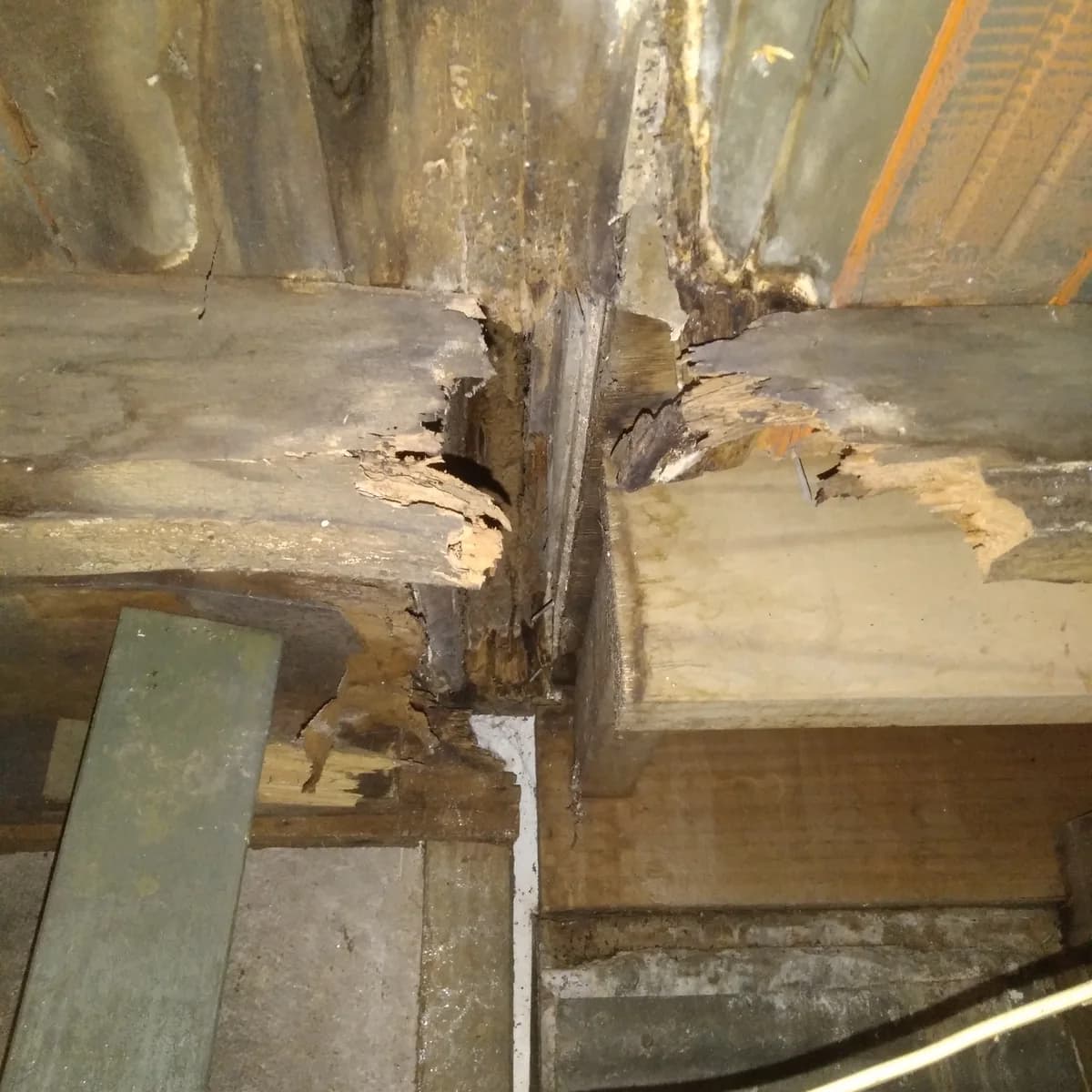
Many New Zealand villas and bungalows stand on timber pile systems — short posts sitting on a concrete block or base (some with concrete, some without — often tied to it with number 8 wire), or a tōtara round or stump in very old/original villas. These timber jack studs carry the load of the bearer, joists, floorboards and framing above — and everything you own. I've spent 12 years in these subfloors. Here's what actually goes wrong down there.
The big four problems
1. Rot at ground level. Timber piles fail where wood meets soil or damp conditions — moisture cycles concentrate decay right at ground level. The pile can look fine above and be mush at the dirt. Poor subfloor ventilation and drainage accelerate it dramatically.
2. Borer and insect damage. Untreated native timber piles in older homes are a borer buffet. Borer-weakened piles can crush or compress, rather than rot (although sometimes all three can be present) — different failure, same sagging floor. (And borer damage is often mistaken for rot, which changes the right fix.)
3. Settlement. Piles that were set too shallow, set on inadequate footings, or sit in soft/filled ground gradually sink — rarely evenly. One corner settles, and upstairs you get the classic pattern: sloping floor, sticking doors, cracks at that corner. And it compounds: when exterior footings sink or settle, more load is placed unevenly onto the surrounding piles — which weren't designed for that extra load. → doors and floors guide
4. Well-meaning bodge jobs. Decades of “fixes”: packers stacked onto pile tops, jack studs added onto old concrete blocks doing their best to stay plumb. Some hold fine; some are the reason the floor bounces.
Signs from above (no crawling required)
Bouncy, creaky or springy floors, a floor that slopes toward one corner, doors out of square, gaps under skirting, and exterior cracks near one corner. → should I worry about cracks?
Signs from the access hatch
You don't need to crawl the full subfloor — good photos from the hatch tell a lot: piles visibly leaning, stacked packers, daylight under pile tops, damp ground or standing water, white fungal growth on timber, or frass (borer dust) in joists or piles.
What fixing piles involves
- Individual pile replacement: prop/level, dig out the old, replace with a new treated post and concrete, or re-pack. Very common — most houses need a handful, not all of them.
- Jack and pack (re-levelling): jacking the floor and re-packing where piles have settled but remain sound. The cheaper way to re-level a timber home — honest caveat: it's a shorter-term fix than repiling, since it treats the level, not the inground concrete.
- Partial repile: one zone (often the more weathered or weather-susceptible side of a home).
- Full repile: the big job — but genuinely needed far less often than feared. Sometimes the house will need to be lifted to install new bearers and obtain sufficient depths; sometimes it doesn't, if the subfloor clearance is better than 400mm. If it's less than 400mm, you may be able to get the work completed by lifting the floorboards instead.