
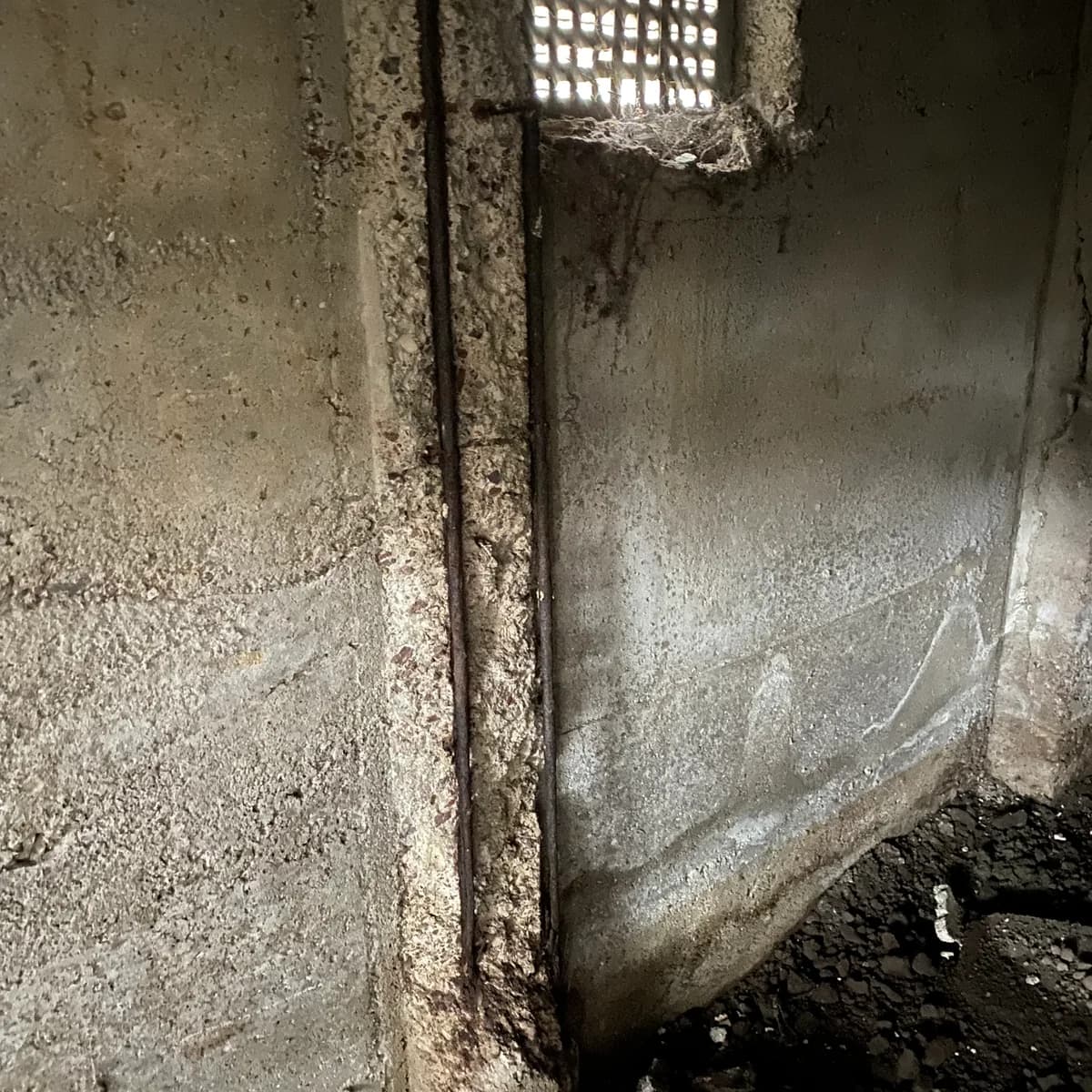
Not every crack in concrete or masonry is the ground moving. Some of the most alarming-looking cracks — bulging, flaking concrete with rust stains bleeding through — are spalling, sometimes called “concrete cancer.” One possible cause is steel inside the concrete corroding, rather than movement beneath the house.
Distinguishing deterioration, corrosion, and movement matters because the investigation and repair scopes can differ; an on-site professional may need to assess more than one contributing factor.
What spalling actually is
Steel reinforcing expands when it rusts — up to several times its original volume. Concrete is strong in compression but weak in tension, so the expanding rust bursts it apart from the inside: first hairline cracks tracking along the line of the buried steel — then, once those cracks are exposed to the weather, moisture gets in and speeds the process — then flaking, then chunks of concrete popping off with rusty rebar exposed behind.
The same mechanism drives corroding steel lintels above windows and doors in brick — the rusting steel jacks the brickwork apart, and the cracking can even step through mortar joints, mimicking foundation movement. → stepped cracking guide
Why NZ homes get it
- Age and cover. Mid-century concrete work often has the steel sitting close to the surface (shallow “cover”), and older concrete is more porous than modern mixes. Once carbonation or chlorides reach the steel, corrosion starts.
- Unwashed sand in the original mix. Some older concrete was made with unwashed (salt-laden) sand during construction — the chlorides were cast in from day one, corroding the steel from the inside regardless of exposure.
- Moisture. Leaks, damp subfloors, and poor drainage accelerate everything.
Common spots: concrete foundation walls and piles, block walls, steel lintels over openings, balcony edges, and older concrete steps and porches. A classic spalling sign: horizontal cracking or flaking sitting around 200–300mm below the exterior weatherboards or cladding.
Spalling vs foundation movement: the tells
| Sign | Spalling | Foundation movement |
|---|---|---|
| Rust staining at the crack | Classic — the giveaway | Rare |
| Crack path | Straight lines tracking buried steel, or hugging a lintel line | Stepped/diagonal, radiating from corners and openings |
| Surface | Bulging, flaking, hollow when tapped, concrete popping off | Cracked but intact surfaces |
| Companions | Mostly on the exterior, but can also be present on the interior or subfloor side of the wall | Sticking doors, sloping floors, gaps → pattern guide |
| Progression | Worsens and accelerates with weather exposure | Often tracks seasons or ground events |
The catch: they're not mutually exclusive. Movement can crack concrete, cracks let water in, water reaches steel, spalling begins. Older foundation walls sometimes have both stories running at once.
What to do about spalling
- Photograph it — the crack line, any rust bleed, and a wide shot of the element.
- Do not strike or disturb damaged concrete. Loose material can fall, and a visual photo check cannot establish what is happening behind the surface.
- Avoid concealing the evidence before assessment. Photograph the area and seek suitable advice before choosing a repair method.
- Location and scale matter. Loose material can be hazardous, and deterioration in a foundation wall, pile, lintel, or other load-bearing element deserves prompt professional assessment.