
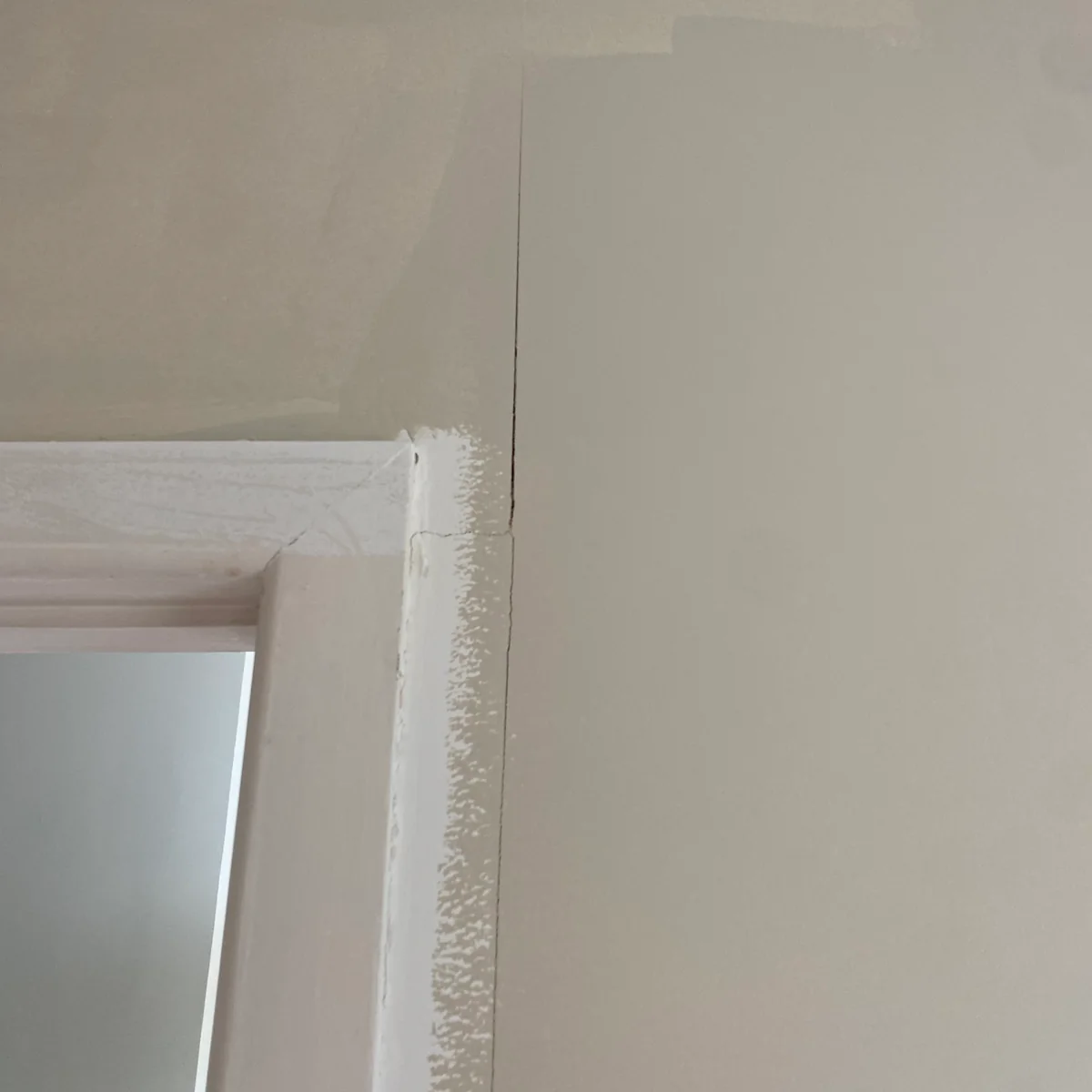
Everyone wants a simple rule — “under 2mm fine, over 2mm bad.” After 12 years of looking at these, I'll tell you the truth: width is the fourthmost useful signal. Here's the order that actually works.
1. Change beats width
A long-unchanged crack and a quickly changing crack provide different evidence, regardless of their starting widths. Photograph cracks with a ruler or fixed scale and a date, using the same angle and distance. Do not delay an inspection to complete a monitoring period when the change is sudden or other warning signs appear.
2. Direction and shape
These shapes provide context, but they are not a severity ranking or diagnosis:
- Vertical hairlines at sheet joins — plasterboard doing plasterboard things
- Crazing/map cracking in old plaster — surface-level ageing in older rendered surfaces
- Horizontal along one course of cinder block or brickwork — worth understanding: potentially the lower courses are losing bearing strength, or an associated structure could be moving and bringing the brickwork with it; sometimes lintel or tie related
- Diagonal from window/door corners — differential movement showing at the weak points
- Stepped through brick mortar joints — a pattern with several possible causes → full guide
- Spalling — flaking or displaced concrete, sometimes with rust staining or exposed reinforcement, which needs its own assessment → spalling guide
3. Edges and history
Get close. Sharp, clean edges — or paint stretching and coming away = fresh movement. Paint bridging the crack, dirt inside = an old crack — and a re-opened filled crack is one of the most informative signs there is: something filled it, and the movement came back.
4. Width is one part of the record
Record the width at a repeatable marked point. The same number can mean different things in plasterboard, plaster, brick, block, or concrete, so no universal threshold establishes cause or urgency on its own.
5. Company
Cracks + sticking doors + floor slope + skirting gaps clustered in one part of the house is a pattern worth assessing → doors and floors guide. One crack without other observed changes provides less context, but cannot be classified from appearance alone.
The two mistakes I see constantly
Panic-filling. Filling and painting a moving crack can remove useful evidence. Photograph and date the crack before cosmetic work; if it reopens, record the change and seek advice appropriate to the circumstances.
Normalising. “It's always been like that” — said about a crack that has, in fact, been quietly growing for five years, because nobody had a baseline photo or measurement. Building age is useful context, not a diagnosis.