
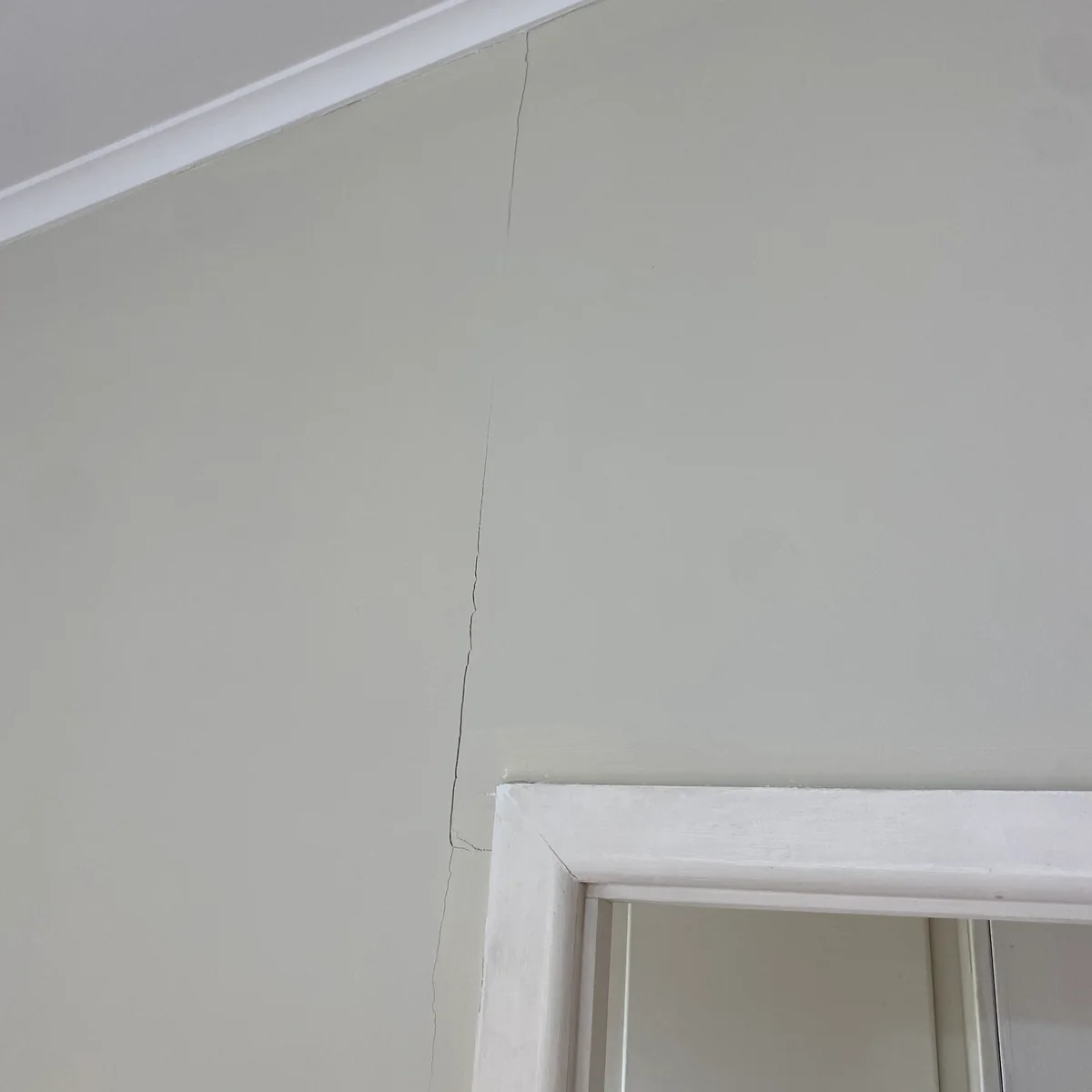
Doors and floors are your house's early-warning system. Long before a crack appears in a wall, a foundation that's moving will rack door frames out of square and tilt floors — which is why “the bedroom door suddenly won't close” is one of the most common things people mention when they call me.
It's also, frequently, nothing. Here's how to tell.
The innocent explanations (check these first)
Humidity. Timber doors and jambs can swell depending on the humidity — the movement is small, but it's enough to make doors sticky, and NZ's climate, especially in summer, is very humid. A door that sticks and frees up with the seasons is doing normal NZ things.
Hinges and hardware. Dropped hinges, worn strike plates, paint buildup. Two minutes with a screwdriver rules this out.
Old-house floors. Most villas and bungalows have some floor slope that's been there for 50 years. Historic slope is character; new or increasing slope is data.
One tip from the trade: if unlevel floors bother you, the time to re-level is when repair or repiling work is already happening. But know that levelling an old house comes at a price beyond the jacking — depending on the amount of retrofitting, repairs, and associated structures, some damage to linings, finishes, and joinery will likely occur as the house moves back. The extent of levelling worth doing comes down to your appetite for the remedial work that follows.
When doors and floors point at the foundation
The pattern that gets my attention:
- Multiple doors/windows in the same area of the house changing behaviour around the same time
- New sticking that doesn't track the seasons — or gets worse each cycle
- Visible gaps: door frames out of square, gaps opening between skirting and floor, gaps at bench/wall junctions — and signs a door has previously been planed at the top or bottom, which means someone has already been chasing this movement
- A marble rolls — floors that have developed a direction. A quick level across the floor beats guessing; note readings and re-check in a few months
- Plus cracks — sticking doors and fresh cracking near the same corner is a differential-movement pattern. → should I worry about cracks?
Underneath, the usual suspects in NZ homes: piles settling or deteriorating at ground level → timber pile problems, clay shrink/swell at one corner, drainage soaking one side of the site, or slab settlement in newer houses.
What to do this weekend
- Map it. Record which doors are affected, where they are, and when the change began. The distribution is useful evidence, but it does not diagnose a cause.
- Level readings on the floor near affected doors. Date them.
- Walk the exterior on that side: downpipes, drainage, pooling water, cracks in any baseboards or the concrete or block base — and is there a large tree close by?
- Photograph from the access hatch only if it is safe. Do not enter a low, wet, damaged, electrically hazardous, or otherwise unsafe subfloor. A qualified inspector can assess inaccessible areas.
- Baseline everything with photos — if it's seasonal, next cycle proves it; if it's progressive, you'll have the evidence that gets you a proper answer fast.