
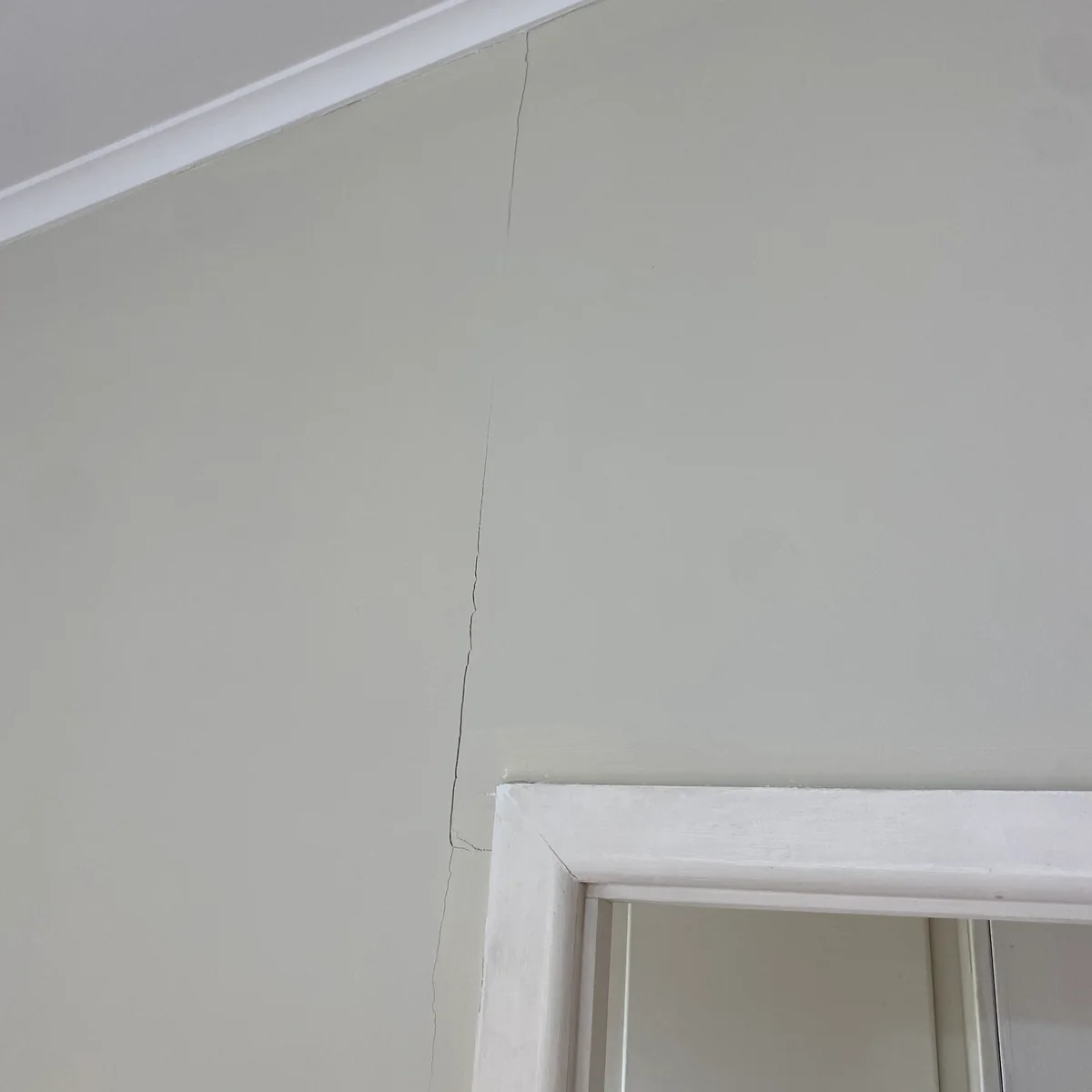
After any decent shake, the same thing happens across the region: people walk their houses, phones out, finding cracks they've never noticed — and having no idea whether each one is new, old, or serious.
Safety first: if your house has visible structural damage — leaning walls, a shifted foundation, doors jammed in a way that traps you, chimney damage overhead — leave and get official help. This page is for the far more common situation: the house is clearly liveable, but there are cracks and you want answers.
Step 1: Document everything, today
Photograph every crack you find — even ones you suspect are old — with a coin or tape measure for scale, wide shot plus close-up, today's date. This does three jobs:
- Separates new from old. In a week you won't remember which were which.
- Claim evidence. If it is safe, dated photos can help document condition. Follow your insurer's and the Natural Hazards Commission's instructions.
- A movement baseline. Post-quake, some cracks keep moving as the ground resettles. Day-zero photos make that visible.
Step 2: Triage what you found
Post-quake cracks follow the same logic as any others, with extra attention on:
- Stepped cracks in brick/block or the foundation wall itself — the quake may have caused (or revealed) differential foundation movement → stepped cracking guide
- New diagonal cracks at multiple window/door corners — the weaker areas of the structure may be compromised
- Chimney cracks — masonry chimneys are the most quake-vulnerable part of older NZ homes; check where the chimney meets the exterior cladding at the roof/soffit area — that's where the most pronounced movement will be evident — and where the chimney intersects the base in a concrete foundation
- Doors/windows that jam post-quake — frames shifted or foundation moved → doors and floors
- Subfloor signs: do not enter a damaged or unsafe subfloor. Photos from a safe access point may be useful for a qualified assessor. → pile guide
Fine cracking in finishes can occur during shaking, but appearance alone cannot establish whether damage is cosmetic. Consider the whole building and any official placard or assessment.
Step 3: The insurance question
- Contact your insurer as soon as practical and follow its claim instructions
- If safe, photograph damage before repair; do not delay urgent safety work, and follow professional or official directions
- Keep every photo, note, and receipt
- Keep an original, dated photo record and provide it to the relevant assessor if requested
(We help you document and understand damage. Whether something is claimable is between you, your insurer, and the Natural Hazards Commission — we don't give insurance advice.) Official claims process →
Step 4: Watch for late movers
Conditions can change after an event. Follow the monitoring interval recommended by your insurer, engineer, or other qualified assessor, and report new or worsening damage rather than relying on a fixed schedule.