
You're buying a house. The building report arrives, and somewhere in it: “evidence of settlement,” “piles show deterioration,” “recommend further investigation by a suitably qualified person.” Your stomach drops, your unconditional date is Friday, and the report has just told you it's not going to tell you.
The wording may also raise questions for your lender or insurer, so keep the original report and ask each party what evidence they require rather than guessing.
This page is for exactly that moment.
Why building reports hedge on foundations
Building inspectors are generalists working to NZS 4306 — they document visible conditions but usually can't (and shouldn't) diagnose foundation causes or price repairs. So they flag and refer: “recommend further investigation.” It's not evasion; it's scope. But it leaves you holding a vague foundation note and a deadline.
Decode the common phrases
- “Evidence of historic settlement/movement” — the house moved at some point. Very common in older NZ housing; often long-stabilised. The question is whether it's active.
- “Piles show deterioration at ground level” — ask which piles were visible, what deterioration was observed, and whether access limited the inspection. → timber pile problems
- “Floors out of level” — measured slope. Ask: is there recent-movement evidence, or is this 60-year-old history? → uneven floors
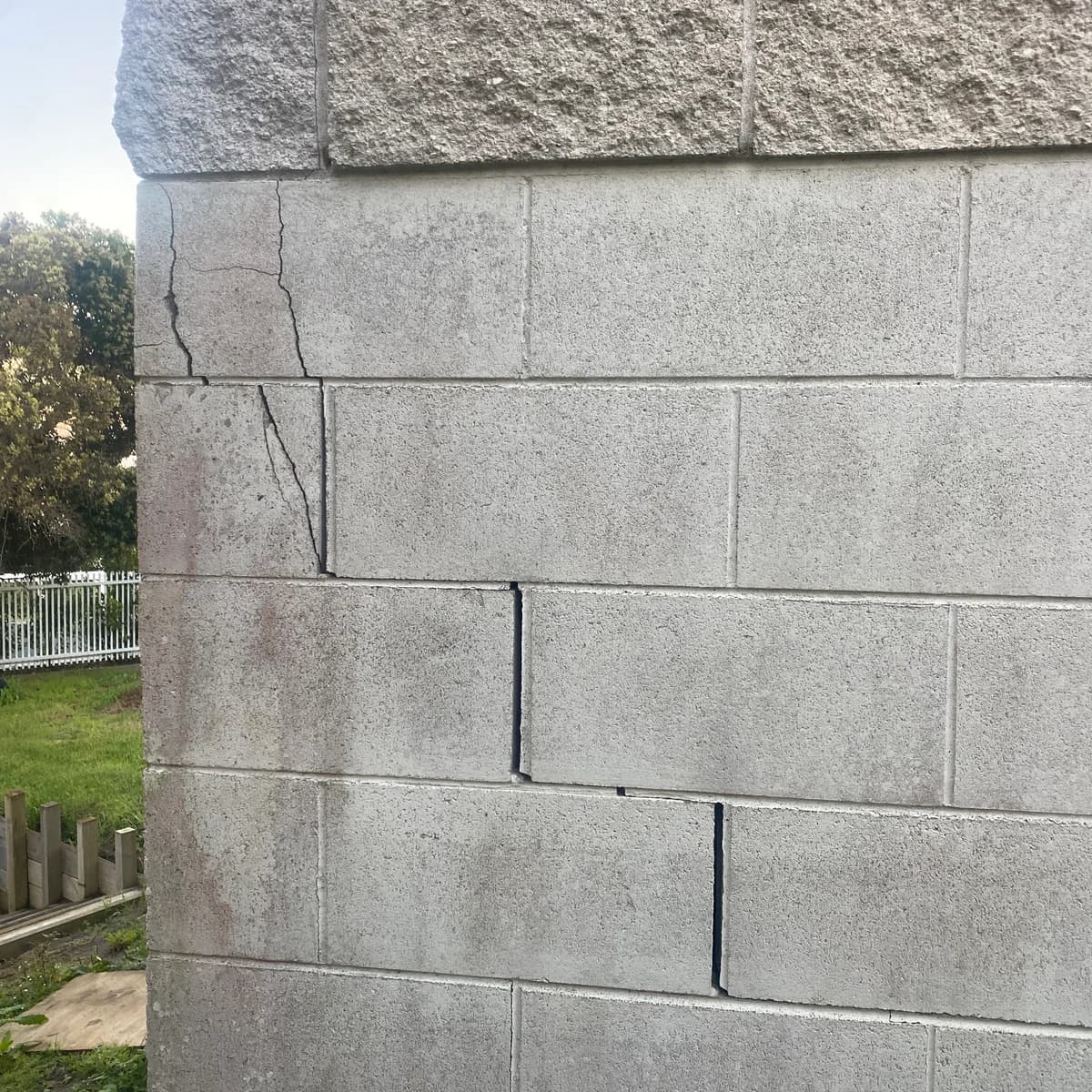
- “Cracking consistent with ground movement” — see the pattern guides → stepped cracking
- “Recommend geotechnical/structural engineer” — clarify the question the engineer is being asked to answer, then allow suitable time in due diligence.
Your options, honestly
1. Ask for clarification. The same short phrase can describe very different observations. Ask the inspector where the sign was found, how it was measured, what limitations applied, and why further investigation was recommended.
2. Organise the evidence. Photograph what the report flagged — without entering an unsafe area — and record the inspector's wording and property context. BaseCheck can turn that material into a structured first-pass screening summary and follow-up questions. Start your check — upload photos free →
3. Obtain the right inspection or quotation. If the finding could affect your decision, obtain evidence from an appropriately qualified person. Do not turn a photo-screening observation into a repair scope or price.
4. Consider engineering input — when the report recommends it, when structural cause or stability is uncertain, or where factors combine to add complexity (for example, a public utility line beneath the area of potential movement, non-engineered fill, large trees, a large retaining wall close by, or lateral creep in the soil). Slower and costs more, but it's the right call for genuine structural uncertainty.
Due-diligence tip: do not let a short contractual deadline force an unsupported technical or financial decision. Contact your lawyer and the relevant professionals early if you need more time or evidence.